Trends in project management
Trends in Project Management
Summary
Whilst artificial intelligence (AI) and automation are captivating the project management world, the question inevitably arises as to how much (and whether at all) AI will change our work. What other trends will shape our future, and what skills will be needed to master upcoming projects with confidence? Technological change goes hand in hand with a greater emphasis on soft skills, adaptive leadership (future skills) and a consistent focus on sustainability (ESG). Genuine collaboration and sustainable stakeholder relationships remain a core, purely human competence even in the age of AI.
Trends in Project Management
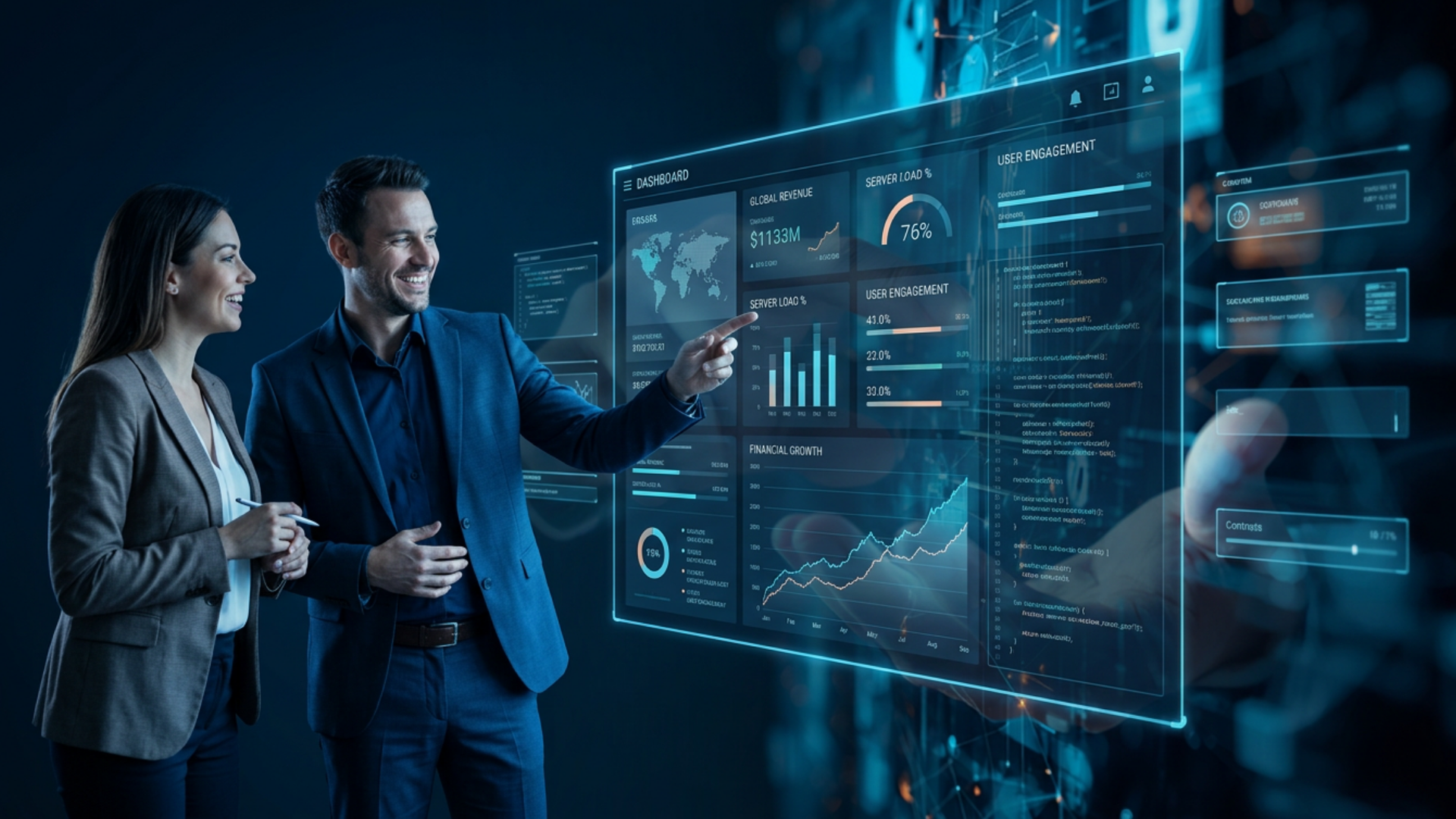
At present, hardly any other topic is occupying the business world as intensely as artificial intelligence and the question of what specific implications this technology will have for our day-to-day work. In the world of project management, this dynamic is very much in evidence.
At the specialist conferences I have attended – such as the IPMA World Congress 2025, PM-Welt 2026 and Freelance Unlocked 2026 – AI is consistently one of the dominant focal points. Related seminars and workshops on the subject are quickly fully booked.
A clear insight is emerging: AI noticeably enriches and optimises our tool landscape and efficiently relieves project managers of administrative or repetitive tasks. However, when it comes to dealing directly with people, the technology is only of limited help. We still shape the genuine, value-adding interaction with the project team, clients and stakeholders ourselves – as human beings, not as algorithms. It is precisely for this reason that complementary skills in project management are becoming even more important: alongside technological transformation, the focus is shifting towards soft skills, future-oriented competencies (future skills) and a sustainable mindset.
It is said that projects account for 28 per cent of global gross domestic product (GDP), which a) highlights the importance of project management as a driver of global economic development and b) further underlines – or should underline – its significance for sustainability. This figure will rise further with the planned and necessary infrastructure, energy and digitalisation projects, making the predicted shortage of skilled workers by 2035 even more critical, as already outlined in my blog post “Why Project Management?”.
In project management, there are several current and growing trends that are having a significant impact on working practices and the demands placed on project managers and teams:
Focus on sustainability, ESG and social responsibility
- Integration of ESG: Environmental, social and governance (ESG) principles are being integrated more closely into project planning and execution.
- Sustainable projects: Projects must offer added value not only economically, but also environmentally and socially.
- Social responsibility: Given the current challenges, project managers must prioritise ethics, integrity and credibility (real facts and real knowledge rather than ‘fake news’)
Changing requirements for skills (Future Skills)
- Soft Skills& Digital Leadership: Emotionale Intelligenz, Kommunikationskompetenz, Konfliktlösung und der Aufbau von Vertrauen in virtuellen Teams gewinnen stark an Bedeutung. Gefragt ist ein adaptiver/ anpassungsfähiger Führungsstil.
- Data literacy: The ability to interpret complex data, identify trends at an early stage and make fact-based decisions is becoming more important.
- Confident use of AI: Project managers must understand how AI is used and retain responsibility for strategic and ethical decisions.
- Resilience& managing complexity: Greater focus is being placed on the personal resilience of those involved in the face of increasing complexity and an information overload.
Evolution of tools and methods
1. Artificial Intelligence (AI) and automation
- Automation of routine tasks: AI is increasingly taking on tasks such as report generation, schedule adjustments and risk analyses.
- Predictive analytics: AI is used to identify patterns in large volumes of data and predict project risks at an early stage.
- Intelligent assistance systems: The use of AI-supported tools to optimise processes and communication strategies is on the rise.
2. Hybrid and agile Working
- Hybrid project management as the norm: The combination of traditional (planning-intensive) and agile (flexible, iterative) methods is becoming the norm in order to find the optimal mix for each project.
- Increased agility: Agility remains central, with the establishment of frameworks such as Scrum, Kanban and also scaling frameworks such as SAFe for larger organisations.
- Remote and hybrid work: Project teams are increasingly working independently of location (hybrid or remote), making cloud-based PM software, digital collaboration and clear digital communication skills essential.
3. Technological developments in PM-tools
- Integration: Tools are becoming more closely integrated with popular communication platforms (e.g. Microsoft Teams) and offer enhanced functions for real-time monitoring and data analysis.
- Data-driven decision-making: The monitoring and analysis of project data for rapid, informed decision-making are becoming increasingly important.
Quintessenz
The future of project work requires a new synergy of technological proficiency, human strengths and responsible action. Success is no longer measured solely by time and budget, but by the ability to navigate complex systems flexibly and create genuine, sustainable added value.
For project team members, this means a reorientation centred on people, as the actual value creation in a project arises from collaboration. What is required are excellent soft skills, adaptability and the ability to build sustainable trust, even within virtual or hybrid teams. Sustainability and ESG principles are no longer optional extras, but an integral part of modern project planning. Every team member plays a part in ensuring environmental and social added value. And, last but not least, artificial intelligence and modern project management tools are increasingly taking over routine tasks and data-driven analyses. This creates the necessary space to focus on what really matters.
Would you like to find out more, or are you looking for consultancy for your project or support with your project? Then please feel free to contact me.